

No products in the cart.

How Factories Produce Anti-Slip Grip Pencils
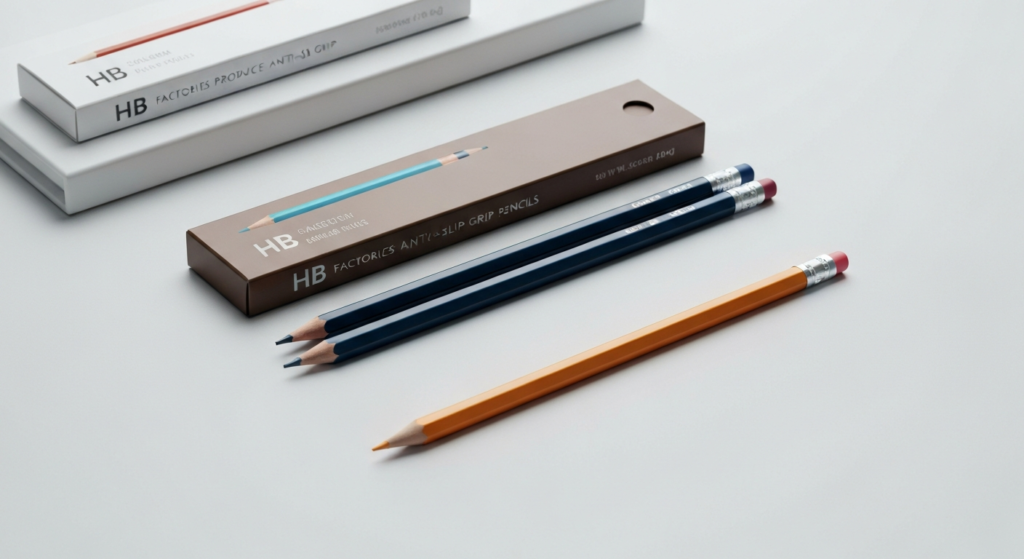
- Mark Yang
- June 30, 2026
- 7:15 pm
- No Comments
Table of Contents
For many, a pencil is a simple tool, a relic of school days or a basic instrument for sketching a quick idea. However, in the world of professional stationery and industrial manufacturing, the pencil is a marvel of materials science and precision engineering. One of the most significant advancements in modern writing comfort is the development of anti-slip grip pencils, designed specifically to reduce hand fatigue and improve control during long writing or drawing sessions.
The journey from raw graphite and timber to a high-performance, textured writing tool involves a complex interplay of chemistry, mechanical engineering, and ergonomic design. Understanding how these pencils are produced reveals the sophisticated infrastructure behind even the humblest stationery items. From the selection of premium wood slats to the application of specialized coatings, every step is calibrated to ensure the final product meets the demands of modern users who prioritize both functionality and comfort.
The Foundation: Materials Science in Lead Production
Before a pencil gains its grip, it must have a core. The “lead” of a pencil is actually a composite of graphite and clay. The ratio between these two materials determines the hardness and darkness of the mark it leaves. Factories begin by grinding raw graphite and clay into fine powders, which are then mixed with water to create a slurry.
According to industry insights from the Musgrave Pencil Company, this mixture is meticulously blended and then extruded through a metal die to form long, thin cylinders. These “green” leads are dried and then fired in a kiln at temperatures exceeding 1,800 degrees Fahrenheit. This firing process is critical; it vitrifies the clay, creating a durable structure that holds the graphite in place.
After firing, the leads are often infused with wax or oil. This treatment fills the microscopic pores in the graphite-clay matrix, ensuring that the pencil glides smoothly across the paper. This smoothness is a prerequisite for anti-slip grip pencils because a scratchy lead would negate the ergonomic benefits of a high-traction barrel. If the lead requires too much pressure to leave a mark, the user will still experience hand strain, regardless of the grip quality.
Slat Manufacturing and the Sandwich Technique
While the lead is being prepared, the wooden housing is manufactured in parallel. Most high-quality pencils use Incense-cedar or Basswood because these species are straight-grained and sharpen easily without splintering. The wood is cut into thin rectangles known as “slats.”
Each slat is roughly half the thickness of a finished pencil. A specialized machine carves parallel grooves into the slats, perfectly sized to hold the leads. In a process often referred to as the “sandwich technique,” glue is applied to the grooves, and the leads are laid inside. A second grooved slat is placed on top, and the entire assembly is pressed together under high pressure.
This industrial-scale assembly requires extreme precision. If the grooves are misaligned by even a fraction of a millimeter, the lead will be off-center, making the pencil difficult to sharpen and prone to breakage. As highlighted by ASM International, the selection of materials and the processing conditions—such as the moisture content of the wood and the curing time of the adhesive—are what ultimately define the quality of the instrument.
Engineering the “Anti-Slip” Feature
The defining characteristic of anti-slip grip pencils is the treatment applied to the barrel. Unlike standard pencils that receive a simple layer of glossy lacquer, anti-slip varieties undergo additional manufacturing stages to enhance friction. There are three primary methods factories use to achieve this:
1. Soft-Touch Coatings: This involves applying a specialized matte varnish or a thin layer of Thermoplastic Elastomer (TPE). This coating feels slightly rubberized or “velvety” to the touch, providing a natural resistance that prevents fingers from sliding down toward the tip.
2. Raised Textured Patterns: Some manufacturers use screen-printing or 3D-ink technology to apply small dots or ridges along the barrel. These raised elements provide mechanical “teeth” for the skin to grip, which is particularly useful for students or professionals working in humid environments where hands may sweat.
3. Ergonomic Shaping: Before the coating is even applied, the wooden barrel may be shaped into a triangular or hexagonal form. A triangular barrel naturally aligns with the three-finger “tripod grip,” reducing the amount of squeeze-force required to hold the pencil securely.
The application of these features requires advanced machinery. For instance, creating raised grip dots involves a precise UV-curing process where the “ink” is deposited in thick droplets and instantly hardened by ultraviolet light so it maintains its 3D shape rather than flattening out.
Comparative Production Overview
To understand the difference in industrial requirements, the following table compares standard pencil production with the specialized requirements for anti-slip grip pencils.
| Manufacturing Step | Standard Pencils | Anti-Slip Grip Pencils |
|---|---|---|
| Barrel Shaping | Mainly Hexagonal or Round | Ergonomic Triangular or Specialized Hex |
| Coating Type | Standard Pigmented Lacquer | TPE, Matte Soft-Touch, or UV-3D Ink |
| Surface Texture | Smooth / Glossy | Micro-textured, Dotted, or Ribbed |
| Drying Process | Heat Evaporation | UV Curing or Multi-Stage Chemical Drying |
| Friction Coefficient | Low (Prone to sliding) | High (Enhanced stability) |
The Role of Industrial Standards and Machinery
Operating a factory that produces these specialized tools requires adherence to rigorous industrial standards. The United Nations Industrial Development Organization (UNIDO) emphasizes the importance of “appropriate technology” in pencil manufacturing. This refers to the use of machinery that can maintain high output while ensuring the safety and non-toxicity of the materials used.
For anti-slip grip pencils, the lacquers and rubberized coatings must be non-toxic and free of phthalates, especially since these products are frequently used by children. Factories must employ closed-loop ventilation systems to handle the volatile organic compounds (VOCs) sometimes found in traditional paints, although many modern plants have shifted to water-based or UV-curable coatings to improve sustainability.
Quality control at this stage involves “friction testing,” where automated arms simulate the human grip to measure the force required for the pencil to slip. This ensures that the anti-slip properties are consistent across every batch produced.
Mechanical Variations: A Different Approach to Grip
While wood-cased pencils rely on coatings and shaping, mechanical pencils achieve anti-slip properties through component assembly. As explored in research shared by IvyPanda, the manufacturing of a mechanical pencil is an exercise in precision plastic injection molding and metal fabrication.
In the case of anti-slip grip pencils in the mechanical category, the “grip” is often a separate component—a sleeve made of silicone, knurled metal, or over-molded rubber. During assembly, this sleeve is fitted onto the barrel. The engineering challenge here is ensuring the grip does not rotate or slide off the barrel over time, which requires tight tolerances and often a “snap-fit” or adhesive bond during the assembly line process.
This contrast highlights the two philosophies in the industry: the material-transformation approach (wood pencils) versus the component-assembly approach (mechanical pencils). Both aim for the same ergonomic result but use vastly different industrial pathways to get there.
The Finishing Touches: Cutting, Stamping, and Sharpening
Once the “sandwich” of slats and leads has been glued and the anti-slip coating has been cured, the large blocks are fed into a shaping machine. High-speed cutters—spinning at thousands of revolutions per minute—slice the block into individual pencils. It is during this phase that the final hexagonal or triangular shape is perfected.
After being cut, the individual anti-slip grip pencils are sanded at the ends to ensure they are perfectly flush. They then move to the “tipping” station, where the ferrule (the metal ring) and the eraser are attached. The ferrule is crimped onto the wood with small metal teeth, ensuring a secure fit that won’t wobble during use.
Finally, the pencils are brand-stamped. In high-end manufacturing, this isn’t just ink; it’s often a “foil stamping” process where heat and pressure transfer a metallic foil onto the barrel. For pencils with textured grips, this stamping must be carefully placed so it doesn’t interfere with the 3D dots or the soft-touch coating’s integrity.
Why Manufacturing Quality Matters to the End User
The reason factories invest so much in the production of anti-slip grip pencils is the direct correlation between tool quality and user performance. In a transactional context, buyers—whether they are sourcing for a school district, an art supply brand, or a corporate office—look for “industrial reliability.”
A poorly manufactured anti-slip pencil might have a coating that peels off after a week of use, or a texture that is too abrasive, causing blisters rather than preventing fatigue. High-quality factory processes ensure that the TPE or UV-dots are chemically bonded to the lacquer or wood. This durability is what separates a professional-grade writing instrument from a generic one.
Furthermore, the “sharpenability” of the pencil is a hallmark of good manufacturing. If the wood slats were not dried properly or if the glue is of inferior quality, the pencil will crack when sharpened. Factories producing anti-slip grip pencils prioritize the “bond strength” between the wood and the lead, which reinforces the lead and prevents it from shattering inside the barrel if the pencil is dropped.
Sustainability in Modern Pencil Factories
In today’s market, the manufacturing process is not complete without considering environmental impact. Leading factories now source their wood from FSC-certified (Forest Stewardship Council) forests, ensuring that for every tree harvested, more are planted.
The production of anti-slip grip pencils has also become “greener.” Water-based lacquers have largely replaced solvent-based ones, and the energy-intensive kiln-firing of leads is increasingly powered by biomass—often the very sawdust and wood scraps generated during the slat-cutting process. This circular economy within the factory reduces waste and lowers the carbon footprint of each pencil produced.
The Evolution of the Grip
The demand for anti-slip grip pencils continues to grow as we become more aware of ergonomics and repetitive strain injuries. Factories are now experimenting with “smart materials” that can change their grip properties based on the temperature of the user’s hand or bio-based plastics that offer the same friction as rubber but are fully biodegradable.
The humble pencil, through the lens of modern manufacturing, is anything but simple. It is a product of centuries of tradition merged with cutting-edge chemical engineering. Whether it is the precise firing of the graphite core, the sandwiching of incense-cedar slats, or the application of high-friction UV-curable dots, the process is dedicated to a single goal: providing a reliable, comfortable, and efficient way for humans to translate their thoughts onto paper.
As you hold one of these anti-slip grip pencils, you are holding the result of a global supply chain and a sophisticated industrial ballet. From the mines of graphite to the managed cedar forests and the high-tech coating lines, every step is a testament to the enduring importance of the written word and the tools we use to create it.
Related Reading
- How Factories Produce Pencils With Soft-Touch Coating
- Understanding Pencil Grip Ergonomics
- Understanding Pencil Coating Adhesion Ratings
- How Factories Avoid Overspray During Lacquer Coating
- Understanding Pencil Coating Smoothness Ratings
- Why Jumbo Triangular Pencils Improve Grip Strength
- Why High-End Brands Prefer Multi-Layer Coatings
- How Factories Prevent Pencil Flaking During Lacquer
Share This Post
Share on facebook
Share on twitter
Share on linkedin
