

No products in the cart.

Why Retailers Choose Sustainable Pencil Packaging
- Mark Yang
- June 10, 2026
- 7:15 pm
- No Comments
Table of Contents
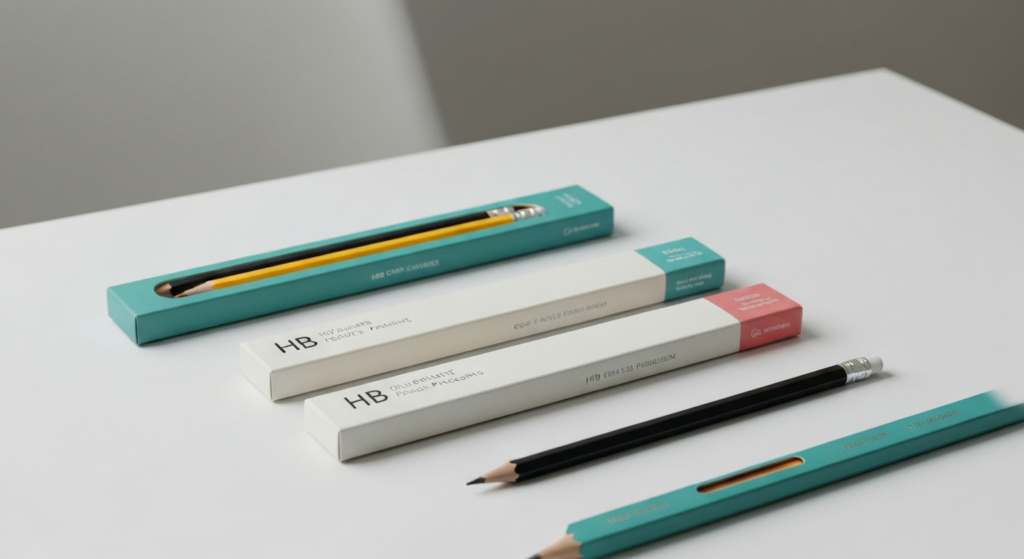
The global stationery market is currently undergoing a quiet but profound transformation. For decades, the humble pencil—a tool rooted in natural wood and graphite—was frequently encased in glossy plastics or over-engineered composite materials. Today, the narrative has shifted. Retailers are increasingly demanding sustainable packaging pencils, not merely as a nod to environmental trends, but as a calculated business strategy to align with modern consumer values and supply chain efficiencies.
For a stationery retailer, the packaging is the first point of physical contact with the customer. In the world of art supplies and office goods, where tactile experience and brand aesthetics are paramount, the box is as much a part of the product as the pencil itself. Moving toward sustainable solutions represents a holistic shift in how products are manufactured, shipped, and perceived in a competitive marketplace.
The Commercial Imperative for Eco-Friendly Stationery
The transition to sustainable packaging is rarely driven by a single factor. Instead, it is a confluence of consumer pressure, regulatory shifts, and a realization that “going green” can actually streamline the bottom line. Research indicates that brand recognition is significantly bolstered when a company demonstrates ecological stewardship. For retailers, stocking products that use sustainable packaging pencils is an immediate way to signal these values to a discerning public.
According to industry insights on the business case for sustainable packaging, companies that prioritize eco-friendly design often see improved operational efficiency. This is because sustainable design often focuses on “right-sizing”—reducing the amount of material used, which in turn reduces weight and shipping costs. For a retailer moving thousands of units of graphite or colored pencils, these marginal gains in package volume translate into significant annual savings.
Furthermore, the rise of e-commerce has fundamentally changed how packaging is judged. In a physical store, a box might need to be flashy to grab attention. In the e-commerce world, the “unboxing experience” is the moment of truth. A customer who receives a set of high-end pencils wrapped in layers of non-recyclable plastic often feels a sense of “eco-guilt,” which can negatively impact their perception of the brand.
Consumer Perception and the Psychology of Paper
Understanding why customers prefer certain materials is vital for any retailer. Empirical data suggests that consumers have a high level of trust in paper-based packaging. A qualitative study on consumer perceptions of sustainable paper-based packaging found that many shoppers associate the texture and “natural” feel of paper with higher product quality and environmental responsibility.
When a retailer chooses sustainable packaging pencils made from FSC-certified cardboard or recycled kraft paper, they are tapping into this psychological preference. The visual cues of matte finishes, earthy tones, and clear recycling symbols communicate a message of authenticity. This is particularly important in the “artist” segment of the market, where users are often more sensitive to the environmental origins of their tools.
Beyond Materials: The Role of Data and Logistics
A common misconception is that sustainable packaging is only about the material of the box. True sustainability encompasses the entire lifecycle of the product, from the factory floor to the customer’s door. Expert retailers are now looking at their logistics data to optimize how these packages move through the supply chain.
By leveraging real-time data and analytics, businesses can consolidate shipments and eliminate unnecessary transit. Smarter logistics lead to a lower carbon footprint, which is a core component of a modern sustainability strategy. As noted in this guide on optimizing packaging through logistics, the goal is to move beyond mere material choices to a systemic approach that improves both environmental impact and cost-effectiveness.
For example, if a pencil set is packaged in a slim, rectangular cardboard box rather than a bulky plastic blister pack, more units can fit onto a single pallet. This increases pallet density, reduces the number of truck trips required, and lowers the fuel consumption per unit. This is where sustainability meets the “hard math” of retail profitability.
Technical Standards: Defining “Sustainable” in the Pencil Industry
For a retailer to make an informed choice, they must understand the different tiers of eco-friendly packaging. Not all “green” packaging is created equal. The industry generally categorizes sustainable packaging pencils based on three main criteria:
- Recyclability: Can the material be processed by standard municipal recycling programs? (e.g., uncoated cardboard).
- Biodegradability: Will the material break down naturally in the environment without leaving toxic residue?
- Renewability: Is the material sourced from rapidly renewable resources or post-consumer waste?
Retailers should look for specific certifications such as the Forest Stewardship Council (FSC) or the Programme for the Endorsement of Forest Certification (PEFC). These labels ensure that the wood used for the pencils and the paper used for the packaging come from responsibly managed forests.
Comparing Traditional vs. Sustainable Pencil Packaging
The following table highlights the differences between traditional packaging methods and the modern sustainable alternatives that retailers are now prioritizing.
| Feature | Traditional Packaging (Plastic/PVC) | Sustainable Packaging (Paper/Molded Fiber) |
|---|---|---|
| Environmental Impact | High; often ends up in landfills; non-biodegradable. | Low; easily recyclable or compostable; renewable sources. |
| Consumer Perception | “Cheap” or outdated; seen as wasteful in e-commerce. | Premium and ethical; aligns with modern “green” values. |
| Shipping Efficiency | Often bulky blister packs; difficult to stack tightly. | High; compact designs optimized for pallet density. |
| Disposal | Requires specific plastic recycling; often ignored. | Can be placed in standard curbside paper recycling. |
Design Innovations in Sustainable Pencil Sets
To maintain the integrity of the pencil—especially fragile colored lead or soft charcoal—the packaging must be protective. Historically, plastic trays were used to keep pencils from rolling around and breaking. However, innovation in paper engineering has provided superior alternatives.
Retailers are now sourcing sustainable packaging pencils that utilize “molded pulp” or “corrugated inserts.” Molded pulp, similar to egg cartons but refined for a high-end look, provides excellent cushioning. Corrugated cardboard inserts can be laser-cut to hold pencils securely in place without a single gram of plastic.
Another major trend is the “reusable” packaging concept. Some pencil tins are now designed with high-quality, recyclable aluminum that the customer is encouraged to keep as a permanent pencil case. This shifts the packaging from a disposable item to a value-add for the product.
The Impact of E-commerce on Packaging Choices
The explosion of online shopping has made packaging more critical than ever. In a retail store, the packaging protects the product from “shelf wear.” In e-commerce, it must survive the “last mile” of delivery, which involves multiple touchpoints, sorting machines, and potential drops.
As highlighted by Crown Pack’s analysis of e-commerce packaging, the demand for sustainable options is no longer an optional add-on. For businesses operating online, the packaging is the physical manifestation of their brand values. Using sustainable packaging pencils helps meet these evolving customer expectations, fostering loyalty in a crowded market where switching brands is as easy as a single click.
Furthermore, shipping “air” is a major cost driver in e-commerce. Sustainable packaging tends to be more compact, which reduces the “dimensional weight” (DIM weight) charges imposed by carriers like FedEx or UPS. For retailers, this is a direct way to increase margins while also reducing the carbon footprint of every delivery.
How Retailers Can Select the Right Eco-Friendly Partners
Choosing to stock sustainable packaging pencils is the first step, but retailers must also vet their suppliers. Manufacturing pencils is a global industry, and standards vary significantly between regions. An expert retailer should ask potential OEM (Original Equipment Manufacturer) partners the following questions:
1. Where is the paper sourced? Ensure it is FSC-certified to avoid contributing to deforestation.
2. What inks are used? Traditional petroleum-based inks can hinder the recyclability of cardboard. Soy-based or vegetable-based inks are the sustainable standard.
3. Are there hidden plastics? Many cardboard boxes have a thin plastic lamination for a “glossy” look. This makes the box non-recyclable. Retailers should opt for aqueous (water-based) coatings instead.
4. What is the recycled content? High-quality packaging should contain a significant percentage of post-consumer waste (PCW).
By asking these questions, retailers ensure they aren’t falling victim to “greenwashing”—a practice where products are marketed as eco-friendly but fail to meet actual environmental standards. For a detailed breakdown of selection criteria, retailers can refer to this comprehensive guide to eco-friendly packaging selection.
The Regulatory Landscape: Future-Proofing the Business
Retailers are also choosing sustainable packaging pencils because of looming regulatory requirements. Governments in the European Union, as well as several states in the U.S. (like California and Maine), are implementing “Extended Producer Responsibility” (EPR) laws. These laws hold retailers and manufacturers financially responsible for the end-of-life disposal of their packaging.
By switching to sustainable, easily recyclable materials now, retailers are future-proofing their operations. They avoid potential “plastic taxes” and ensure they stay ahead of mandatory reporting requirements regarding their environmental impact. In this context, sustainability is not just a marketing choice—it is a risk management strategy.
The Competitive Advantage of Transparency
In the stationery world, transparency is becoming a powerful marketing tool. Retailers who can clearly state that their sustainable packaging pencils are 100% plastic-free, made with 80% recycled content, and printed with soy ink gain a significant edge. This level of detail builds trust with the “prosumer” (professional consumer) who cares about the technical specs of their tools as much as their ecological footprint.
This transparency also extends to the “circular economy” model. Some retailers are now implementing “take-back” programs where customers can return used pencil stubs and packaging for recycling or composting. While this is easier with paper-based packaging, it represents the next frontier in retail sustainability.
Conclusion: The Path Forward for Stationery Retailers
The move toward sustainable packaging pencils is a multi-faceted decision that touches every part of a retail business. It is a response to a more conscious consumer base, a way to reduce logistics costs, and a method for staying compliant with global environmental regulations.
For the modern retailer, the goal is to provide a product that feels good to use, looks professional on the shelf, and leaves a minimal footprint on the planet. By focusing on smart material selection, optimized logistics, and transparent communication, businesses can transform their packaging from a necessary expense into a strategic asset. The future of stationery is not just in the graphite lead or the cedar wood, but in the sustainable box that carries those tools to the next generation of artists and thinkers.
Related Reading
- Understanding Pencil Packaging Material Choices
- Why Retail Chains Prefer Ready-to-Shelf Pencil Packaging
- Why Pencil Set Packaging Affects Retail Sales
- Why Importers Prefer Factories With FSC Supply Chains
- Why European Retailers Need REACH-Compliant Pencils
- How Factories Reduce Pencil Chipping During Packaging
- Why Retailers Choose Pre-Sharpened Packs for Convenience
- How Pencil Factories Manage Raw Material Certifications
Share This Post
Share on facebook
Share on twitter
Share on linkedin
