

No products in the cart.

How Factories Produce Pencils for Promotional Events
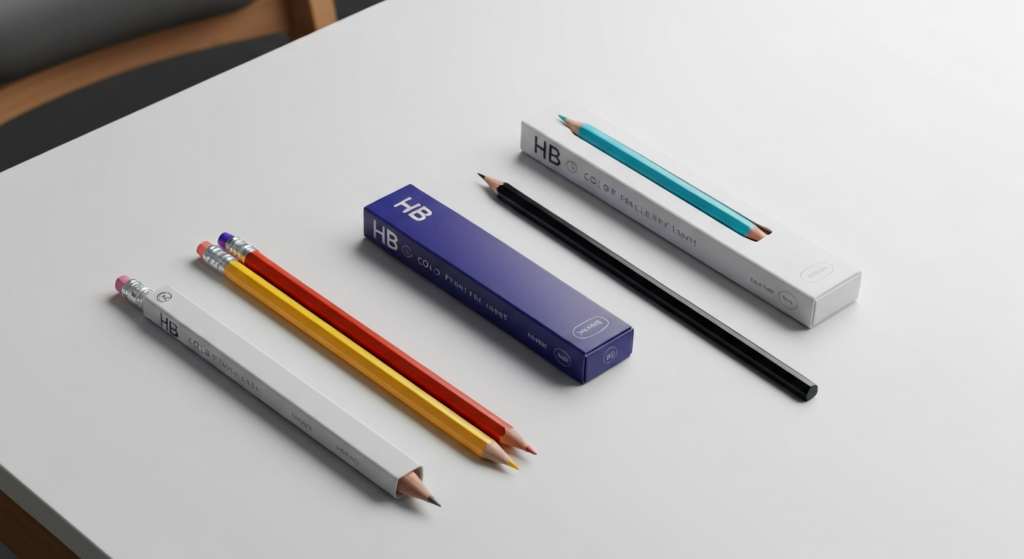
- Mark Yang
- June 3, 2026
- 7:15 pm
- No Comments
Table of Contents
When we hold a pencil, we rarely consider the complex industrial ballet required to produce it. For businesses looking to elevate their brand, a custom-branded writing instrument is more than just a tool; it is a tactile representation of their identity. Understanding how factories handle promotional pencils OEM (Original Equipment Manufacturer) orders reveals a fascinating intersection of traditional craftsmanship and high-speed modern engineering.
In the world of corporate gifting and event marketing, the pencil remains a timeless staple. Unlike digital ads that disappear in a second, a well-made pencil sits on a desk, travels in a pocket, and is touched thousands of times. But how does a raw block of cedar and a pile of graphite powder transform into a precision-engineered promotional tool? The process involves specialized machinery, meticulous material science, and a deep understanding of branding aesthetics.
The Core Ingredient: Engineering the “Lead”
The most common misconception about pencils is that they contain lead. In reality, the “lead” is a sophisticated mixture of graphite and clay. The ratio of these two ingredients determines the hardness and darkness of the mark. For high-volume promotional pencils OEM production, consistency is the primary goal. If one batch of pencils writes smoothly but the next is scratchy, it reflects poorly on the brand printed on the barrel.
The process begins by grinding graphite into an extremely fine powder. This powder is then blended with clay and water to create a pliable paste. This mixture is forced through a metal die in a process called extrusion, creating long, spaghetti-like strings of graphite. These strings are dried, cut to size, and then fired in a kiln at temperatures exceeding 1,800 degrees Fahrenheit. This firing process is what gives the core its strength and smoothness. According to industry experts at Musgrave’s detailed production guide, this stage is critical because the kiln firing fuses the clay and graphite into a ceramic-like structure that resists breaking under pressure.
To ensure the pencil writes fluidly, the fired cores are often soaked in hot wax or oil. This fills the microscopic pores in the graphite, allowing it to glide across the paper. For promotional orders, factories usually stick to a standard HB (No. 2) grade, as it offers the most universal appeal for general writing tasks.
The Architecture of the Wood: The Sandwich Method
The wooden casing of a pencil is not a single piece of wood with a hole drilled through it. That would be nearly impossible to manufacture at scale. Instead, factories use a “sandwich” technique. This involves taking thin, flat slats of wood—typically Incense Cedar or Basswood—and milling precise grooves into them.
These slats are wide enough to accommodate several pencils at once, usually five to ten. The graphite cores are laid into the grooves of one slat, and a second grooved slat is glued on top, effectively “sandwiching” the graphite. This assembly is then clamped under high pressure until the glue sets. This method ensures that the core is perfectly centered, which is vital for even sharpening.
Choosing the right wood is essential for promotional pencils OEM success. Incense Cedar is the gold standard because it doesn’t splinter and has a pleasant, nostalgic aroma. However, for budget-friendly promotional runs, Basswood or Poplar are often used. These woods are easier to source in bulk while still providing a smooth surface for painting and printing. As noted in a feature by the Smithsonian on Inside American pencil factories, the precision of these wooden slats is what separates a high-quality instrument from a cheap disposable one.
Shaping and Smoothing: From Slat to Hexagon
Once the “sandwich” is dry, it moves to the shaping machine. This machine uses high-speed steel cutters to carve the block of wood into individual pencils. Depending on the client’s preference, the cutters can create round, hexagonal, or even triangular shapes. Hexagonal pencils are the most popular for promotional use because they don’t roll off desks and provide more flat “real estate” for printing logos.
After the pencils are cut from the slats, they are quite rough. They undergo a series of sanding stages to ensure the surface is perfectly smooth. Any imperfection in the wood will be magnified once the paint is applied. For an OEM manufacturer, this stage is where quality control begins to tighten. Any pencil with a knot in the wood or a misaligned core is discarded before it reaches the finishing department.
The Finishing Touch: Painting and Branding
This is the stage where a generic writing tool becomes a marketing powerhouse. Promotional pencils OEM services offer an array of finishing options. The pencils are typically passed through a “lacquer machine,” which applies multiple thin coats of paint. High-end promotional pencils may receive up to seven or eight coats of lacquer to achieve a deep, lustrous finish.
Once the base color is dry, the branding process begins. There are three primary methods for applying logos to pencils:
1. **Screen Printing:** Ideal for bold, solid colors and large logos that wrap around the barrel.
2. **Foil Stamping (Hot Stamping):** Uses heat and pressure to transfer a metallic or colored foil onto the wood. This is the traditional “gold leaf” look often seen on classic yellow pencils.
3. **Digital UV Printing:** A modern approach that allows for full-color gradients and complex photographic images. This is becoming increasingly popular for brands that want their promotional items to stand out with high-definition graphics.
The alignment of the logo is crucial. Factories use specialized jigs to ensure that the text is centered on one of the hexagonal flats, making it legible when the pencil is held or lying on a table.
Ferrules, Erasers, and the Final Assembly
A promotional pencil isn’t complete without its “jewelry”—the ferrule and the eraser. The ferrule is the metal sleeve that holds the eraser in place. In the world of promotional pencils OEM, these can be customized too. While silver and gold-toned ferrules are standard, some brands opt for matte black, vibrant colors, or even striped ferrules to match their corporate color palette.
The erasers (known in the industry as “plugs”) are made from synthetic rubber or vinyl. For a premium feel, manufacturers use non-smudging compounds that won’t leave streaks on the paper. The ferrule is crimped onto the end of the wooden barrel, and the eraser is inserted and secured.
A Comparison of Promotional Pencil Specifications
To help buyers understand the options available in OEM manufacturing, the following table breaks down common specifications:
| Feature | Standard Option | Premium/Custom Option |
| :— | :— | :— |
| **Wood Type** | Basswood / Poplar | Genuine Incense Cedar |
| **Core Grade** | HB (No. 2) | 2B (Softer) or Harder H-grades |
| **Shape** | Hexagonal | Round, Triangular, or Oversized (Carpenter) |
| **Branding Method** | Single-color Silk Screen | Multi-color Foil or 360° Digital Print |
| **Ferrule Finish** | Aluminum (Silver/Gold) | Painted, Brass, or Matte Black |
| **Eraser Quality** | Standard Pink Rubber | White Vinyl or Color-Matched Latex-Free |
The History and Logistics of “Penciltown”
The geography of pencil manufacturing has deep roots. In the United States, Shelbyville, Tennessee, became known as “Penciltown USA” due to its proximity to vast cedar forests and its cluster of specialized factories. This historical hub demonstrates how localized expertise can drive an entire industry. Understanding the heritage of companies like Musgrave helps us appreciate the resilience of this trade. You can learn more about the regional impact of this industry through The history of Penciltown USA.
For a modern brand, working with an OEM partner often means navigating global supply chains. While the “lead” might be processed in one facility, the wood might come from sustainably managed forests in another region. The logistics of promotional pencils OEM involve coordinating these raw materials to meet tight deadlines for trade shows and product launches.
Quality Assurance: Ensuring the Brand Shines
The final stage of production is perhaps the most important: quality assurance. When a factory produces 50,000 pencils for a tech conference, every single one must perform. Inspectors look for several key indicators of quality:
* **Sharpening Integrity:** Does the wood shave away cleanly without clogging the sharpener?
* **Core Centering:** Is the graphite perfectly in the middle? If it’s off-center, the point will break constantly.
* **Imprint Durability:** Can the logo be scratched off easily with a fingernail? It should be bonded permanently to the lacquer.
* **Tensile Strength:** Does the pencil snap too easily under the pressure of a heavy-handed writer?
By maintaining these standards, promotional pencils OEM manufacturers ensure that the pencil doesn’t just act as a business card, but as a reliable tool that reinforces the brand’s commitment to quality.
Why Pencils Still Dominate Promotional Marketing
In an era of high-tech gadgets, the humble pencil remains a preferred promotional item for several reasons. First is the cost-to-impression ratio. A pencil is incredibly inexpensive to produce compared to a USB drive or a power bank, yet it has a long lifespan. Second is the psychological connection. Writing by hand is linked to better memory retention and creativity. When a brand provides a tool that facilitates those processes, it builds a positive subconscious association.
Furthermore, pencils are inherently eco-friendly. Most modern OEM factories prioritize FSC-certified (Forest Stewardship Council) wood, ensuring that for every tree harvested, more are planted. Since pencils are biodegradable and don’t contain batteries or plastics (mostly), they appeal to the growing segment of environmentally conscious consumers. The history of this transition from raw graphite “plumbago” to the modern eco-friendly tool is beautifully documented in The evolution of the modern pencil.
The Future of OEM Pencil Manufacturing
As we look forward, the technology behind promotional pencils OEM continues to evolve. We are seeing a rise in “antimicrobial” coatings for pencils, which became popular following global health concerns. There is also a push toward more creative shapes and sensory experiences, such as scented pencils or those with “seed capsules” at the end that can be planted when the pencil becomes too short to use.
For the buyer, the key is finding a manufacturer that understands the balance between the technical requirements of a writing instrument and the marketing requirements of a promotional product. A pencil that looks great but won’t sharpen is a failure; a pencil that writes perfectly but has a blurry logo is a missed opportunity.
By diving into the “how” of pencil manufacturing—from the kiln-firing of the graphite to the final crimp of the ferrule—businesses can better appreciate the value of these miniature billboards. The next time you see a custom-branded pencil, remember that it is the result of centuries of innovation, a few precise machines, and a very clever “sandwich” of wood and stone.
Related Reading
- How Factories Ensure Multi-Pack Consistency
- Why Importers Request Batch Stability Reports
- How Factories Apply Glitter or Foil Effects
- Understanding Pencil Packaging Material Choices
- How Factories Produce Pencils for Standardized Exams
- Why Pencil Branding Requires High-Precision Printing
- How Factories Produce Themed Pencil Sets for Brands
- Why Retail Chains Prefer Foil-Stamped Logo Pencils
Share This Post
Share on facebook
Share on twitter
Share on linkedin
