

No products in the cart.

How Factories Produce Multi-Purpose Office Pencil Sets
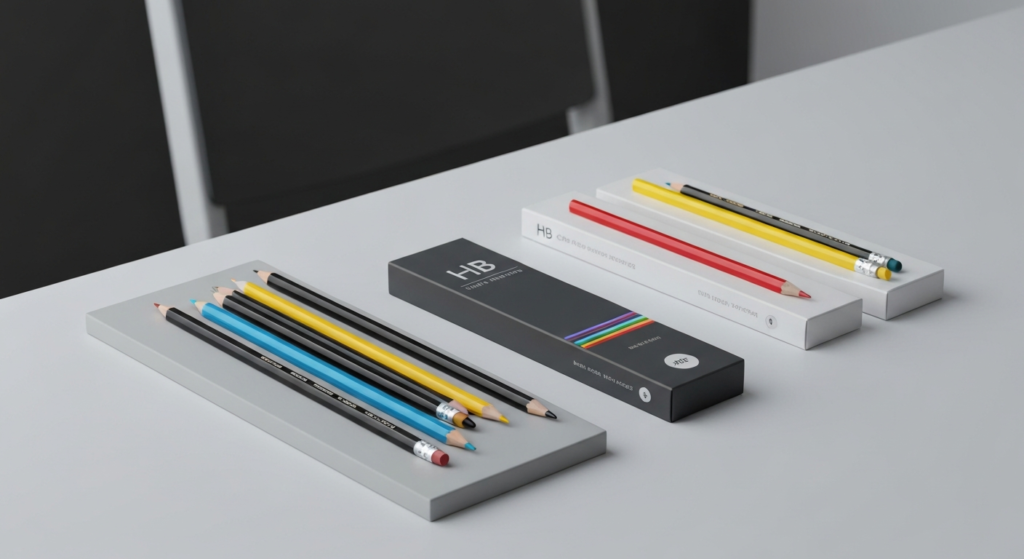
- Mark Yang
- July 24, 2026
- 7:15 pm
- No Comments
Table of Contents
When you hold a professional-grade office pencil, you are holding the result of a century-old engineering tradition refined by modern automation. For procurement managers and brand owners, understanding the journey from raw timber to a finished boxed set is essential for making informed decisions. The world of office pencil sets OEM manufacturing is far more complex than simply “wood and lead.”
It involves high-precision machinery, chemical engineering, and a sophisticated supply chain that ensures every pencil in a multi-purpose set performs consistently. Whether it is for sketching a quick mockup or signing a document, the quality of the pencil reflects the brand it carries. This article explores the intricate steps factories take to produce these essential tools on a global scale.
The Foundation: Sourcing Premium Raw Materials
The manufacturing process begins long before the machines start running. A high-quality pencil requires specific wood species that are soft enough to sharpen easily but strong enough to protect the delicate graphite core. Most factories specializing in office pencil sets OEM utilize Incense Cedar or high-grade Basswood.
Incense Cedar is favored for premium sets because it doesn’t splinter and has a distinct, pleasant aroma. Basswood, while more cost-effective, offers a smooth texture that accepts lacquers and paints beautifully. These woods are harvested from sustainable forests, often carrying certifications like those from the Forest Stewardship Council (FSC) to ensure environmental responsibility.
Beyond the wood, the “lead” is actually a mixture of graphite and clay. The ratio between these two components determines the hardness and darkness of the mark. For office sets, an HB (No. 2) grade is standard, but multi-purpose sets often include 2B for softer writing or H for lighter technical drafts. The graphite is ground into a fine powder, mixed with clay and water, and extruded into thin rods.
The Graphite Core Preparation and Treatment
Once the graphite rods are extruded, they are not yet ready for the wood casing. They are brittle and lack the smoothness required for professional use. To fix this, factories air-dry the leads and then fire them in a kiln at temperatures exceeding 1,000°C (1,832°F). This high-heat treatment fuses the clay and graphite into a durable, solid structure.
After firing, the leads undergo a “waxing” process. They are submerged in a hot vat of oils and waxes, which permeate the microscopic pores of the graphite. This step is what makes a pencil feel “smooth” on paper. When a brand requests an office pencil sets OEM partner, they often specify the smoothness level to ensure the writing experience matches their brand’s identity.
Without this waxing stage, the pencil would feel scratchy and provide inconsistent line density. High-end multi-purpose sets often use a proprietary blend of waxes to ensure that the lead doesn’t crumble under pressure, providing a reliable tool for high-volume office environments.
The Slat and Grooving Process
Pencils are not made by drilling holes into round sticks of wood. Instead, they are constructed using a “sandwich” method. The wood is cut into thin rectangular pieces called “slats.” Each slat is roughly half the thickness of a finished pencil and wide enough to accommodate five to ten pencils side-by-side.
A high-speed grooving machine carves semi-circular channels into the face of each slat. These grooves are measured to the micron to ensure the graphite core fits perfectly. In an office pencil sets OEM facility, precision is paramount; even a slight misalignment in the grooves would result in an off-center lead, making the pencil impossible to sharpen correctly.
Once the grooves are cut, a specialized adhesive is applied. Modern factories use high-strength, flexible glues that bond the lead to the wood. This bonding process, often called “cushioning,” helps prevent the lead from breaking inside the wood if the pencil is dropped—a critical feature for office supplies that undergo heavy daily use.
The Sandwich Assembly and Shaping
After the leads are placed into the grooves of the bottom slat, a second grooved slat is placed on top, creating a “slat sandwich.” This assembly is then placed under a heavy hydraulic press until the glue is fully cured. This block of wood and graphite is now ready to be transformed into individual pencils.
The shaping process uses a milling machine with two sets of cutters. The first set shapes the top half of the pencils (either hexagonal or round), and the second set shapes the bottom half. Hexagonal shapes are the industry standard for office pencil sets OEM because they prevent the pencils from rolling off desks and provide a better grip during long writing sessions.
The precision of these cutters is what gives the pencil its smooth finish. If the knives are not sharp, the wood grain will tear, leading to a rough surface that is difficult to paint. This stage requires constant monitoring by factory technicians to ensure the dimensions remain consistent across thousands of units.
Surface Finishing: Lacquering and Branding
A raw wood pencil is functional but lacks professional appeal. To achieve the classic look found in retail office sets, the pencils pass through a lacquering machine. They are pulled through a series of “gaskets” or paint baths, applying multiple thin layers of lacquer. High-quality sets may receive up to five or seven coats of paint to achieve a deep, vibrant color.
After the paint has dried, the pencils move to the branding station. This is where office pencil sets OEM customization truly happens. Most factories use foil stamping (also known as hot stamping) or pad printing to apply the brand name, lead grade, and logo. Foil stamping provides a premium, metallic finish that is highly durable and resistant to fading.
For multi-purpose sets, color coding is often used. For example, a set might include pencils with different barrel colors to denote different lead hardness levels or to match a corporate identity. This level of customization allows businesses to create a cohesive stationery ecosystem for their employees or clients.
Tipping: Ferrules and Erasers
The final mechanical step in production is “tipping.” While some high-end drawing pencils are “dipped” (having a painted end), most office pencils require an eraser. This involves a ferrule—the metal sleeve that holds the eraser in place.
Automated machines spin the pencils at high speeds, slide the metal ferrule onto the end, and then crimp it securely into the wood. The eraser is then inserted into the ferrule and crimped again or glued. In the office pencil sets OEM sector, the quality of the eraser is just as important as the lead. It must be “non-smudging” and latex-free to meet modern safety and performance standards.
Factories often test the “pull-out strength” of the ferrule to ensure it doesn’t detach during use. They also verify that the eraser compound doesn’t harden over time, ensuring the pencil remains a useful tool throughout its entire lifespan.
Technical Comparison of Common Pencil Woods
| Wood Type | Sharpenability | Durability | Typical Use Case |
|---|---|---|---|
| Incense Cedar | Excellent | High | Premium OEM Sets |
| Basswood | Very Good | Medium | Standard Office Supplies |
| Poplar | Good | Medium | Budget/Bulk Orders |
| Recycled Paper | Fair | Low | Eco-Friendly Promos |
Quality Control and Compliance Testing
A reputable factory does not just produce; it validates. Every batch of pencils must undergo rigorous testing to ensure it meets international safety standards. For office pencil sets OEM, this often includes testing for heavy metals and toxins, ensuring the pencils are safe for all ages.
Common certifications include ASTM D-4236, which confirms that art and stationery materials are properly labeled for health hazards. Furthermore, the “break strength” of the lead is tested using a machine that applies vertical pressure until the core snaps. This ensures that the pencils can withstand the rigors of mechanical sharpeners.
Quality control inspectors also check for “finish consistency.” This means ensuring that the color of the lacquer is identical across all 12 pencils in a set and that the branding is centered. In the competitive world of stationery, even a minor aesthetic flaw can lead to a rejected shipment.
Packaging and Set Assembly
The “multi-purpose” aspect of these sets often comes down to the packaging. An office set might include six HB pencils, two 2B pencils, a sharpener, and a high-quality eraser. The assembly line for these sets is often semi-automated, with sensors ensuring that each component is present before the box is sealed.
Packaging options for office pencil sets OEM range from simple cardboard tuck boxes to premium tin cases or eco-friendly kraft paper tubes. The packaging serves two purposes: protecting the pencils during transit and serving as a marketing tool on retail shelves or corporate desks.
Many modern factories also offer “kitting” services, where pencils are bundled with other office stationery like notebooks or rulers. This vertical integration allows brands to source an entire product line from a single manufacturing partner, streamlining the supply chain and reducing shipping costs.
The Role of Sustainability in Pencil Manufacturing
As global awareness of environmental issues grows, the stationery industry is pivoting toward greener practices. Factories are increasingly using water-based lacquers instead of solvent-based ones to reduce Volatile Organic Compound (VOC) emissions. For an office pencil sets OEM project, choosing a sustainable manufacturer is no longer just an option; it is a brand necessity.
Waste management is another critical area. The sawdust generated during the shaping and grooving process is often collected and compressed into fuel pellets or used in particleboard production. This circular economy approach helps factories reduce their carbon footprint and lower operational costs, which can be passed on to the client.
Furthermore, many factories are exploring alternative materials, such as “reconstituted wood” or pencils made from recycled newspapers. While traditional wood remains the favorite for professional use, these eco-friendly alternatives are gaining traction in the promotional products market.
Why OEM Partnerships are Essential for Growth
For businesses looking to enter the stationery market, partnering with an experienced factory is the most efficient path to success. An office pencil sets OEM partner provides the technical expertise, machinery, and raw material access that would be impossible for a single brand to develop independently.
OEM manufacturers offer “scalability.” Whether a brand needs 5,000 sets for a regional promotion or 500,000 sets for global retail distribution, the factory can adjust its production lines to meet the demand. They also stay abreast of the latest trends, such as ergonomic triangular barrels or matte “soft-touch” finishes, allowing brands to innovate without investing in new R&D.
Ultimately, the goal of a pencil factory is to turn a commodity into a high-value tool. Through careful material selection, precision engineering, and rigorous quality control, these facilities produce the multi-purpose sets that keep the modern office running smoothly. When you choose the right manufacturing partner, you aren’t just buying pencils; you are investing in a legacy of craftsmanship.
Related Reading
- Understanding Pencil Slat Tolerance in OEM Production
- How Factories Reduce Pencil Defects During Assembly
- Why Importers Need Full Traceability for Pencils
- Why Retail Chains Prefer Eco-Friendly Pencil Sets
- How Factories Ensure Multi-Pack Consistency
- Why Buyers Prefer Packaging With Multi-Language Labels
- Understanding Pencil Packaging Material Choices
- How Factories Produce High-Precision HB Scale Pencils
Share This Post
Share on facebook
Share on twitter
Share on linkedin
