

No products in the cart.

How Factories Test Pencil Sharpenability Across Sharpeners
- Mark Yang
- December 29, 2025
- 3:53 pm
- No Comments
Table of Contents
Every pencil user—from artists to engineers—has had a moment of frustration when a pencil breaks during sharpening or fails to produce a clean point. What many don’t realize is that behind the scenes, pencil manufacturers put a great deal of effort into ensuring their products sharpen smoothly and consistently. This involves a specialized process known as the sharpenability test pencils, where pencils are evaluated across various sharpener types to guarantee a reliable user experience.
In this article, we’ll explore how factories test pencils for sharpenability, what tools and standards are used, and why this process is essential for both product quality and consumer satisfaction. Whether you’re a stationery enthusiast, product designer, or just curious about what makes a pencil sharpen well, this deep dive will give you a new appreciation for the humble writing tool.
Why Sharpenability Matters in Pencil Manufacturing
At first glance, sharpening a pencil might seem like a trivial task. But for manufacturers, it’s a critical quality control checkpoint. A pencil that doesn’t sharpen properly can lead to customer dissatisfaction, increased returns, and damage to brand reputation.
Sharpenability refers to how easily and cleanly a pencil can be sharpened without breaking the core (also known as the lead) or splintering the wood. It affects:
- Point durability and usability
- Core integrity (especially for colored or soft graphite)
- Compatibility with different types of sharpeners
- User safety and comfort
Given the wide variety of pencil sharpeners on the market—from handheld blade sharpeners to electric and rotary models—manufacturers must ensure their pencils perform well across all common types.
Inside the Factory: How Sharpenability Tests Are Conducted
Testing the sharpenability of pencils is a multi-step process that combines mechanical testing, visual inspection, and sometimes even user feedback. The goal is to simulate real-world sharpening scenarios as closely as possible.
1. Selection of Sharpeners for Testing
Factories typically test their pencils using a representative sample of common sharpener types. This includes:
| Sharpener Type | Description | Common Use |
|---|---|---|
| Single-blade handheld | Basic sharpener with a single steel blade | School and office use |
| Dual-hole sharpener | Two openings for different pencil diameters | Art and multi-use pencils |
| Electric sharpener | Motorized sharpening with automatic stop | Offices, classrooms |
| Helical (rotary) sharpener | Precision sharpening with rotating blade | Professional and artistic use |
By testing across these devices, manufacturers can verify that their pencils perform consistently, regardless of the user’s preferred tool.
2. Standardized Sharpening Protocols
To ensure objectivity, factories follow a standardized procedure when conducting sharpenability tests. This includes:
- Sharpening each pencil to a fixed length or number of rotations
- Using fresh sharpeners or ensuring blades are in optimal condition
- Recording the time taken to sharpen
- Inspecting the shavings for smoothness and continuity
- Measuring the sharpness angle and point durability
Some manufacturers even use automated sharpening machines to eliminate human variability. These machines apply consistent pressure and rotation, allowing for precise comparison between pencil batches.
3. Visual and Structural Evaluation
After sharpening, the pencil is examined for several key quality indicators:
- Wood grain behavior: Does the wood shave cleanly or splinter?
- Core centering: Is the graphite or pigment core centered within the wood?
- Tip integrity: Does the point break easily under light pressure?
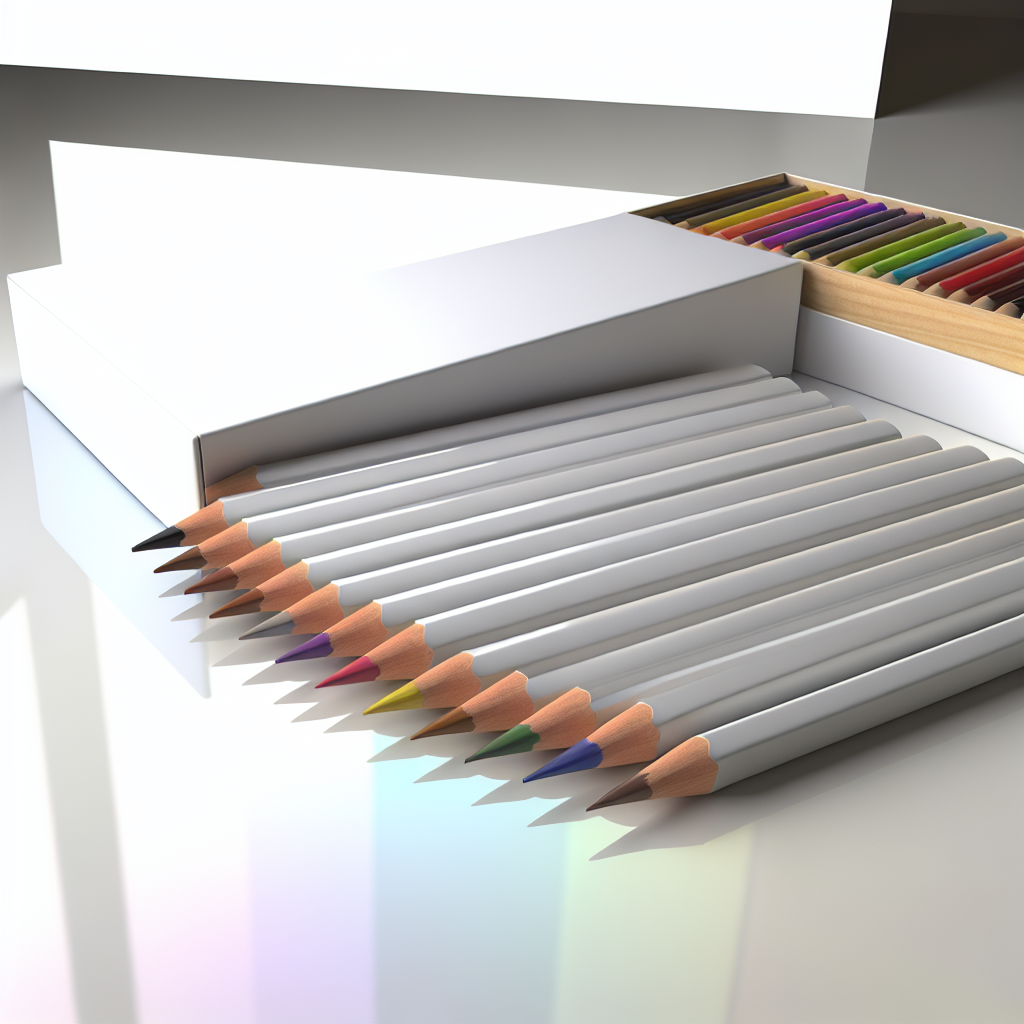
For colored pencils, which often have softer cores, factories pay special attention to whether the pigment crumbles or fractures during sharpening.
4. Sharpening Angle and Point Geometry
Different applications require different point geometries. For example, artists may prefer long, tapered points for shading, while writers often favor shorter, sturdier tips. Factories use angle gauges and micrometers to measure the final point shape, ensuring it matches the intended design.
Dual-hole sharpeners, which are commonly used in factories, offer two sharpening profiles: one for standard graphite pencils and another for thinner, specialty pencils. These tools help achieve a consistent result across large production runs. A detailed explanation of these sharpeners is available in this Quora discussion on presharpened pencils.
Material Science: What Affects Sharpenability?
Not all pencils are created equal. The materials used in pencil construction have a significant impact on sharpenability:
- Wood type: Cedar is the gold standard for smooth sharpening, but cheaper woods like basswood or poplar are often used in budget pencils and tend to splinter more.
- Core composition: Graphite hardness, clay binders, and pigments all influence how easily the core sharpens and whether it breaks.
- Glue bonding: High-quality pencils use strong adhesives to bond the core to the wood, preventing breakage during sharpening.
Manufacturers often tweak these variables to optimize performance for specific markets—such as school pencils that must withstand rough handling, or high-end art pencils that require ultra-fine points.
Sharpeners: The Other Half of the Equation
While much attention is paid to the pencil itself, the sharpener is just as critical in the sharpenability equation. A poorly made sharpener can ruin even the best pencil. The manufacturing process of sharpeners involves precision engineering, especially in blade design and alignment.
As highlighted in this Prezi presentation on sharpener manufacturing, quality control ensures that blades are sharp, durable, and correctly positioned. If the blade angle is off by even a few degrees, it can cause the pencil to jam, splinter, or wear unevenly.
Some premium sharpeners use carbon steel blades or even ceramic for longer-lasting edges. Others include adjustable angle settings to accommodate different point preferences.
How Presharpened Pencils Are Made So Consistently
One of the most impressive feats in pencil manufacturing is the uniformity of presharpened pencils. These pencils often arrive in the box with identical tip lengths and angles, which is difficult to replicate at home.
This consistency is achieved using industrial-grade sharpening machines equipped with dual-hole or helical systems. These machines can sharpen thousands of pencils per hour with minimal variation, thanks to precise calibration and high-tolerance components. The result is a clean, symmetrical point that enhances the user experience right out of the package.
For consumers trying to replicate this at home, the key lies in using high-quality sharpeners and practicing consistent technique. However, without access to factory-grade equipment, achieving the same level of uniformity is extremely difficult.
Sharpenability Testing in the Age of Automation
Modern pencil factories are increasingly using automation and data analytics to refine their sharpenability tests. Machines equipped with sensors can measure torque, resistance, and blade wear in real time, providing valuable feedback for process improvement.
Some manufacturers even use computer vision systems to inspect pencil tips post-sharpening, identifying defects that the human eye might miss. This automation not only improves quality but also reduces waste and enhances production efficiency.
Sustainability and Sharpenability: A Growing Concern
As the stationery industry moves toward more sustainable practices, sharpenability testing is also evolving. Eco-friendly pencils made from recycled materials or alternative woods often pose new challenges in sharpening. Factories must adapt their testing protocols to ensure these materials perform reliably without increasing breakage or waste.
Similarly, sustainable sharpener designs—such as those using biodegradable plastics or modular, replaceable blades—are gaining traction. These innovations require close collaboration between pencil and sharpener manufacturers to maintain compatibility and performance.
Conclusion: Sharpenability as a Mark of Quality
Sharpening a pencil may seem mundane, but for manufacturers, it’s a complex performance metric that reflects the quality of materials, engineering, and design. Through rigorous sharpenability test pencils protocols, factories ensure that every pencil can meet the demands of its intended users—whether that’s a child in a classroom, an artist in a studio, or a professional in the field.
So the next time you sharpen a pencil and get a clean, crisp point, remember: it’s not just luck—it’s the result of meticulous testing and thoughtful design.
For more insights into pencil design and quality control, check out this Quora discussion on presharpened pencils and this Prezi on sharpener manufacturing.
Related Reading
- Why School Pencils Must Meet Low-Breakage Standards
- How Factories Test Pencil Water Resistance
- Why Barrel Roundness Affects Sharpening Feel
- How Factories Test Pencil Resistance to Drops and Impact
- Why Basswood Is Ideal for Clean Sharpening
- Why Schools Choose Pre-Sharpened Pencils for Efficiency
- Understanding Pencil Barrel Compression Strength
- Understanding Pencil Barrel Diameter Tolerance
Share This Post
Share on facebook
Share on twitter
Share on linkedin
